

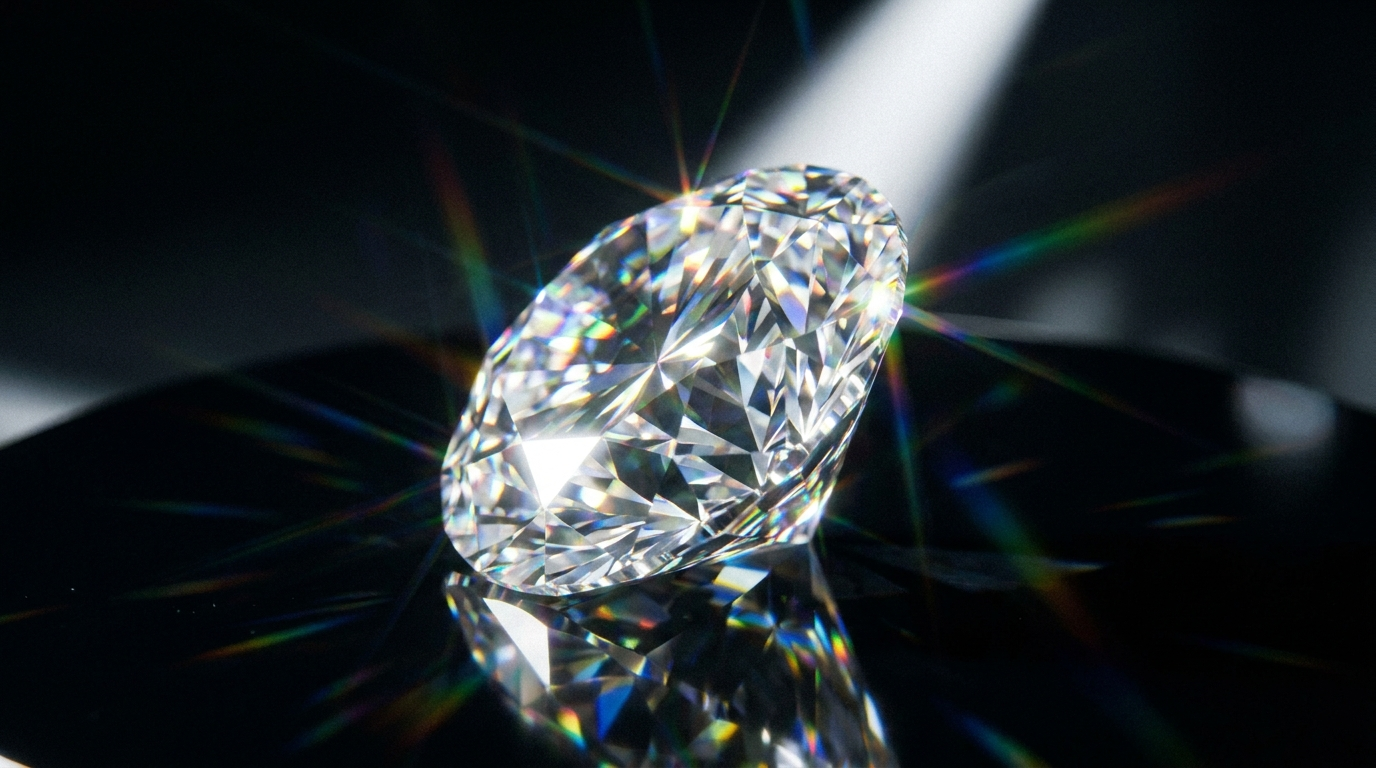
Diamond and graphite—the soft, gray material in your pencil—are both made of exactly the same thing: pure carbon. Yet one is the hardest natural material known, and the other flakes apart with the gentle pressure of handwriting. The difference is entirely in how the atoms are arranged. In diamond, every single carbon atom is covalently bonded to four neighbors in a perfect three-dimensional tetrahedral network. Covalent bonds are the strongest type of chemical bond, and in diamond there are no weak links anywhere—the entire crystal is essentially one giant molecule, a continuous cage of interlocking tetrahedra extending in every direction. To scratch or deform diamond, you have to break these powerful carbon-carbon bonds directly, and enormous force is required to do it.
Graphite, by contrast, bonds each carbon to only three neighbors, forming strong flat sheets that are held to each other by weak forces—so the sheets slide apart easily, which is exactly why pencils write. Diamond’s rigid 3D architecture is also why it forms only under extreme conditions: temperatures above 1,000°C and pressures found roughly 150 kilometers deep in Earth’s mantle, where carbon atoms are squeezed into their most compact arrangement. So a diamond’s legendary hardness isn’t about what it’s made of—it’s about geometry. The same atoms that smear across paper in a pencil become nature’s ultimate fortress when locked into a tetrahedral embrace.