

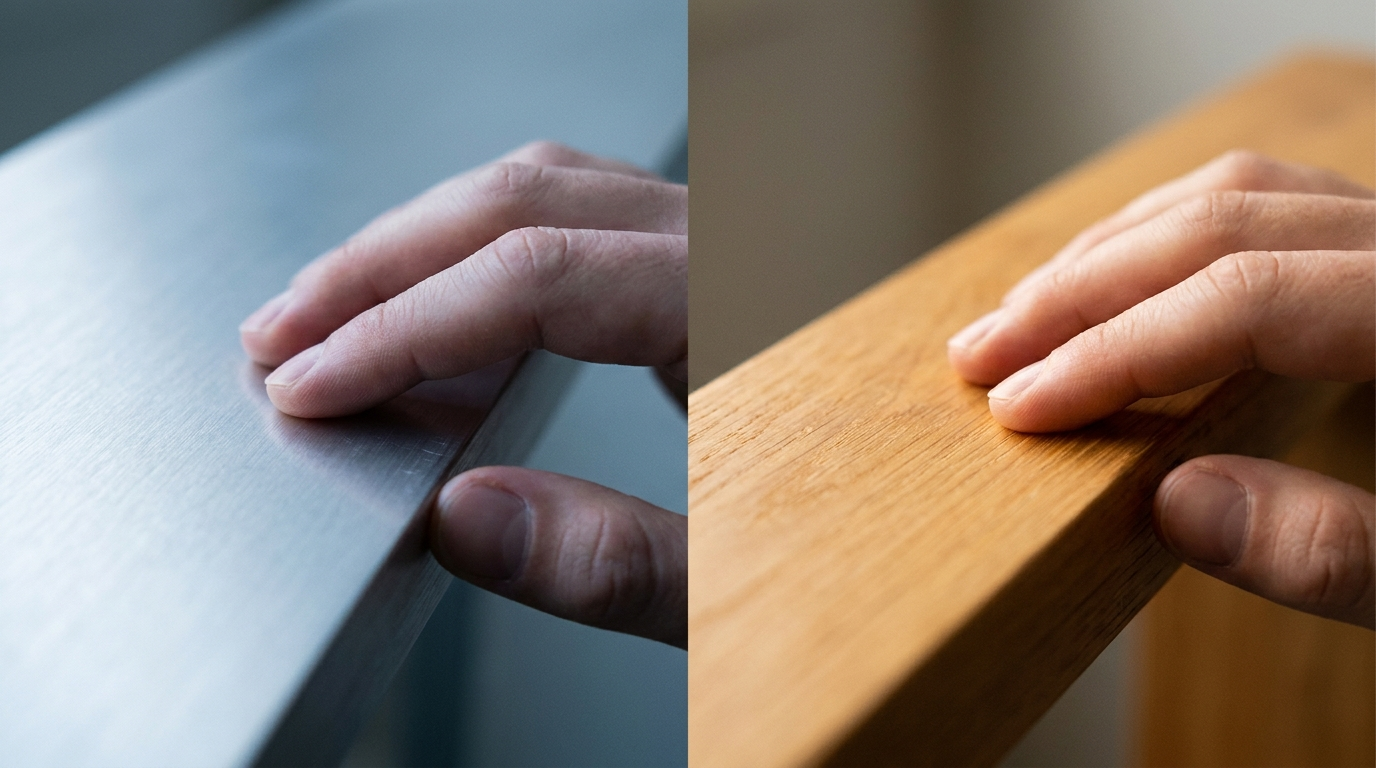
Touch a metal railing and a wooden bench on a chilly morning, and the metal feels dramatically colder—yet a thermometer will tell you they’re exactly the same temperature. Both objects have been sitting in the same air, so both have settled at the same ambient temperature. The trick is that your skin is not a thermometer. Your nerve endings don’t measure the temperature of the object you’re touching; they measure the temperature of your own skin—specifically, how quickly heat is flowing out of it. And that flow rate depends on a material property called thermal conductivity: how efficiently a material transports heat through itself.
Metal is an exceptional heat conductor because its atoms are surrounded by a sea of free-moving electrons that whisk thermal energy away almost instantly. The moment your warm hand (about 33–34°C at the skin surface) touches cold metal, heat rushes out of your skin and spreads rapidly through the entire object—so your skin temperature plummets, and your brain screams “cold!” Wood, on the other hand, is full of trapped air pockets and has no free electrons, making it a poor conductor. Heat leaves your hand so slowly that the thin layer of wood under your palm quickly warms up and stops drawing heat away, so the wood feels mild. Same temperature, wildly different sensation. Your hand isn’t sensing temperature at all—it’s sensing the speed of heat loss. That’s also why the same effect flips in a sauna: hot metal burns you while hot wood at the identical temperature is merely warm.